Showing posts with label Plug N Play. Show all posts

Wednesday, May 22, 2013

Delhi 6

Delhi 6

Cover Art of Album
The soundtrack album released amidst the euphoria of Oscar and Grammy nominations, Golden Globe glory and huge media hype for A.R. Rahman. Each of his release is awaited with bated breath and high hopes. So, let’s check if the whiz kid of Indian music hits the money with this ten-track album.

The beginning is pious with spiritual tracks Aarti (Tumre Bhavan Mein) and Arziyan. The ensemble of female singers, laces of sitar and the cymbals in Aarti radiate a spiritual aura and a vision of circumambulations around the inner sanctum of a temple fills the eyes. The religious fervour is carried forward with Arziyan, a qawwali sung by Javed Ali and Kailash Kher. During its long duration of 8 minutes and 41 seconds, never does a word go unnoticed or an alaap repudiated. The pickups of the tablas, the harmonium, subtle guitar laces, the beautiful lyrics and the skilful execution by the duo- this qawwali is of the same ilk as Piya Haji Ali and Khwaja Mere Khwaja. Rahman once again stamps his authority with this genre.

Now here are some surprises. ‘Bhor Bhaye’ is a duet featuring Ustad Bade Ghulam Ali Khan and Shreya Ghoshal. Yeah, you heard it right! Rahman recreates the old song in Gujri Todi raga by juxtaposing Shreya Ghoshal’s ever-saccharine vocals with Ustad Khan’s dexterous original rendition. However, Shreya Ghoshal’s voice sounds a little incongruous in spite of her skilful performance and the track disappoints a bit. If Bhor Bhaye seems mediocre to you, the title track ‘Delhi-6’ is upbeat and funky. Tanvi’s stylish rendition, the hip-hop beats, some French lyrics contributed by Vivienne and Blaaze’s rap all make for a memorable listen.

If you are waiting for that love song which is an absolute must in a Bollywood soundtrack,   Rahman presents a gem in the form of ‘Dil Gira Dafatan’. This Indian classical-meets-Broadway track is packed with a rich variety of influences ranging from blues to Western Symphony and the multiple layering of sounds accentuates the mesmerising effect it has on the listener. Ash King’s mellow vocals, the keyboards, slow strings, bagpipes, Chinese violins and Chinmayee’s cameo at the end combine to create musical nirvana and after the five and a half minutes elapse, you will be left yearning for more. Prasoon Joshi’s writing is top-notch. This is also Ash King’s Bollwood singing debut.

If you are thinking that the album sounds too melancholy, ‘Genda Phool’ will change your opinions completely. A folk song about the love-hate relationship of a girl with her in-laws, Rekha Bharadwaj (Vishal Bharadwaj’s wife) starts off with her rustic vocals and the song sounds pretty normal till the wicked beats make their way. Things then go berserk and the bass, wah guitar and drum beats play alongside the folksy tune to make a highly enjoyable number. ‘Hey Kaala Bandar’ is as crazy as its name. Old tunes have been reused and this is probably a hangover from the Ghajini and Yuvvraaj soundtracks. The bridge is grotesque and the rap is utter balderdash. The pastiche includes some parts of ‘Behka’ from Ghajini and ‘Dil Ka Rishta’ from Yuvvraaj and the track is outrageously bizarre to say the least. Do not miss it for its sheer shock value!

Mohit Chauhan rediscovers himself with ‘Masakali’. This song is about a pigeon and was initially not to be included in the film. It’s hard to believe that this is the same man who sang ‘Tum Se Hi’ from Jab We Met. The no-holds-barred singing, a quirky accordion solo credited to A.R. Rahman himself and the catchy bassline form the ingredients of this instant hit. It is, according to me, one of Mohit Chauhan’s best works. Next up is ‘Noor’, a short poem penned by Prasoon Joshi and narrated by the stellar Amitabh Bachchan. Joshi talks about finding the Higher Lord in our hearts rather than idols or images and advocates love for humanity irrespective of religion.

Rahman saves the last and the best for himself in ‘Rehna Tu’. He delivers the song with high-pitched passion and Benny Dayal and Tanvi Shah provide soothing backing vocals. The song is about loving your dear ones for what they are, disregarding their miniscule blemishes. The lyrics are truly beautiful, some of the best I have heard in a long, long time. The song dishes out a potpourri of sounds- lounge beats, some heavily programmed sounds, pleasant guitar riffs and of course, Rahman’s soulful rendition. As the lyrics come to an end, Rahman takes the song to another high with his continuum fingerboard solo in which he tweaks an Indian raga along with slow strings playing in the background to synthesise a one-of-its-kind blissful acoustic experience. Arguably, Rahman’s best of all time.
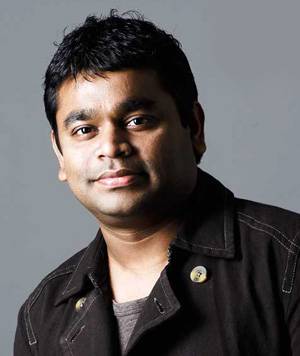
Everyone knows who he is!!!!
Looking back, this film score is a chef d’oeuvre and is grossly underrated and overshadowed by the success of Slumdog Millionaire. If you thought A. R. Rahman was head and shoulders above his contemporaries, he raises the bar even higher till the connoisseurs simply go gung-ho. The album is a milestone in Prasoon Joshi’s writing career  Lyrical beauty is opulent, the melodies are haunting and a large variety of themes and musical influences have been encapsulated by this album. Vintage stuff, highly recommended.

MY PICKS: Justice for all- the entire album!

INTERESTING FACT: The continuum fingerboard or the Haken continuum is played by just 15 international musicians and A. R. Rahman is one of them. The list also includes Jordan Rudess of Dream Theater!


(Links to the music videos are hyperlinked to the song name)

-- Contributed by Niranjan Thakurdesai

Friday, May 17, 2013

And Justice For All - Metallica

And Justice For All

Metallica Band Members and Symbol
…And Justice For All is essentially a progressive metal and a thrash metal album. As is typically with a majority of metal albums, violence and destruction form the milieu; war, social malpractices are the main themes.  James Hetfield’s growling vocals, Kirk Hammett’s pentatonic solos and Lars Ulrich’s stunning work with the drums- this album is a treat for metal lovers. This is also bassist Jason Newsted’s first studio album with Metallica following bass virtuoso Cliff Burton’s tragic death.

Cover of this album
The opening track of the album is ‘Blackened’, a thrash metal composition featuring lightning fast guitar riffs by Kirk Hammett and some dark lyrics describing the stark reality of Mother Earth maimed and scarred due to environmental degradation triggered by humans and the clouds of an impending apocalypse which hover above us if we do not take steps to control the damage. The title track ‘…And Justice For All’ is somewhat overdrawn with a duration of about 10 minutes. Nevertheless, the song is about corruption, how money can buy justice and how the courts dance to the tunes of the wealthy.

‘Eye of the Beholder’ appeals to the listener to look through smoke-screens of lies and fabrications and stand up against imposed limitations on freedom of speech. 

The next track is ‘One’, undoubtedly the piece de resistance of the album. Starting with ambient sounds of helicopters and cries of soldiers, the song slowly flows into a haunting clean guitar intro by Kirk Hammett (one of the best song intros I’ve ever heard) followed by a simple melody crooned by Hetfield. Lyrically, the song describes the predicament of an injured soldier. After the bridge, get ready to be blown away by Ulrich’s work with the double bass as he works in tandem with Hammett and Hetfield to create 3 minutes of absolutely stunning music. Hammett’s guitar solo at the end has garnered wide critical acclaim and is a hit among guitar lovers.

Next up is ‘The Shortest Straw’, a song about modern-day witch-hunts, innocent people wrongfully implicated and convicted by governments across the world. ‘Harvester of Sorrow’ is about a man who is on the precipice of sanity and vents his anger on his family while ‘The Frayed Ends of Sanity’ is a song about an unsuccessful  man gravitating towards paranoia and is on the brink of losing his mind.

‘To Live Is To Die’ is an instrumental which is consistent with their custom of including an instrumental track in each of their studio albums. It starts off with chords on an acoustic guitar, faintly reminiscent of ‘Fade to Black’. It is largely structured around riffs that had been composed by Cliff Burton and not been used. There are some spoken lyrics at the end. Metallica has dedicated this instrumental to Burton who was a victim of a tragic bus accident also involving other band members. The album ends with a bang with ‘Dyer’s Eve’, a song about an agitated man who castigates his parents for protecting and insulating him in a cocoon of religious beliefs, tucked away from the cold world outside.

Overall, the album is noteworthy for its complex and technical guitar solos, intricate passages throughout its songs and a mature choice of themes which was novel in an otherwise hapless metal scene dominated by bands ranting and expatiating on sex, drugs, booze and other vices. It also silenced their critics asking questions about the band’s future after the legendary Cliff Burton’s untimely demise. So, spare an hour and enjoy this thrash-bang ride!

MY PICKS: One, Blackened, Dyer’s Eve

And Justice For All - Full Album

(The names of the songs have been linked with their videos on Youtube)

-- Contributed by Niranjan Thakurdesai.

Wednesday, May 8, 2013

The Joshua Tree - U2


The Joshua Tree - U2

The Joshua Tree Album Cover

Band Members of U2
The album draws its influences from American rock, Irish folk music, acoustic blues and gospel. Released in 1987, it broke the shackles and extended the horizons of alternative rock with its motley nature of themes ranging from love, spirituality to violence, war, politics and social malaises like drug addiction, inequality and unemployment. This is the record which catapulted U2 from heroes to legends and drew multitudes to their fan base.


The album opens with ‘Where The Streets Have No Name’, a stadium anthem which has become a permanent staple in U2’s live concerts. Starting with a chiming guitar arpeggio and modulated synthesisers the song eventually builds up to its climax guided by Bono’s passionate vocals, Adam Clayton’s pulsating sound of the bass and sheer wizardry with the guitar by The Edge to create a ‘wall’ of sound. The name of the song may sound odd, but it stems from Bono’s belief that a person’s income in Belfast can be estimated by knowing his address. The band dreams of a world without inequality, social encumbrances; where the streets have no name.

‘I Still Haven’t Found What I’m Looking For’ deals with spiritual yearning, the void that is sometimes created in spite of success. The chiming sound created by The Edge’s use of the delay effect strongly reminds you of chrome bells ringing on Christmas Eve and Bono’s choir-like singing accentuates the spiritual imagery brought to your mind by the song. The chorus is breathtakingly beautiful. ‘With Or Without You’, a troubled love song inspired by Bono’s conflicting  lives he led as a musician and a family man is notable for The Edge’s use of the delay effect and a prototype of the Infinite Guitar enabling ‘infinite sustain’. The main guitar riff is intoxicating and the song regularly features in ‘Greatest Hits of All Time’ lists.

If you care not to break the chronology, you will be caught off guard by the abrupt conceptual shift of the album with ‘Bullet the Blue Sky’. It is a rebel song with strong political overtones as The Edge ‘puts the El Salvador Civil War through an amplifier’. It successfully synthesises an image of war- Bono’s angry vocals and Adam Clayton’s aggressive bassline are redolent of roaring cannonballs, screeching fighter-planes and ricocheting bullets. ‘Running to Stand Still’, a slow piano ballad describes the plight of a heroin-addicted couple. The subtle guitar notes and the harmonica at the end are soothing and gradually grow on you. ‘Red Hill Mining Town’ speaks about the relationships strained and lives torn apart by unemployment.

‘In God’s Country’ ups the tempo with racy guitar strumming and energetic vocals. The song dishes out innuendos regarding the dearth of political ideas in the West. ‘Trip Through Your Wires’, packed with harmonica, is an unconventional love ballad while ‘One Tree Hill’ is an epitaph, a tribute to the departed, a celebration of life.

As we approach the end, the album skews again. ‘Exit’ is a song about a psychotic killer. Clayton’s  bassline and The Edge’s riffs succeed to create an eerie and surreal aura. The song’s up there with Metallica’s ‘Enter Sandman’ and Michael Jackson’s ‘Thriller’. ‘Mothers of the Disappeared’ is the concluding track of the album. It is a token of empathy to all the mothers whose children have been taken by sporadic occurrences of violence like war and riots. Bono’s choir-like vocals, the morose guitar notes and synthesisers bring the album to a melancholy finale.

The Joshua Tree is notable for utilising the complete range of Bono’s voice and tonal quality and The Edge’s delay effect, creating chiming cadences which went on to become his trademark sound. The album is implicitly critical of The USA’s foreign policy and describes the band’s love-hate relationship with The United States. Overall, the album takes you through various human emotions and packs a punch. Happy listening!


INTERESTING FACT: Writer Derek White conducted a mathematical study of The Edge’s rhythmic delay. He found that by dividing the number of delay notes per minute by the songs tempo in beats per minute, he arrived at ‘e’, an important fundamental mathematical constant!

Joshua Tree Full Track


Contributed by Niranjan Thakurdesai --